
Nevyn Stevenson: Head of Service and Charity Development
We’re delighted to share an exciting new development at SARAG. As part of our ongoing commitment to supporting people affected by asbestos-related illness, we are pleased to be able to expand the breadth of help we offer. From January 2026, we will be providing access to a free Will Writing Service, enabling us to support our community in planning for the future with confidence and peace of mind.
Our Free Will Writing Service:
We are pleased to let you know about a new addition to our services, available from 1 January 2026 — our Free Will Writing Service.
We know that dealing with asbestos-related illness can be overwhelming, and thinking about the future isn’t always easy. This service is designed to offer peace of mind, making it simpler to put your wishes in place with professional support, at no cost to you.
Warm regards,
Nevyn Stevenson
Head of Service and Charity Development
* Our newsletter included a crossword, but some of the clues were missing. Click here to scroll to the crossword
Our Will Writing Service
We work in partnership with The Goodwill Partnership, the largest distributor of home-visit, solicitor-provided Wills in England and Wales. Their regulated solicitors will guide you through the process with care, sensitivity and understanding.
What the service offers:
- Free for you – the charity covers the cost
- Home visit available – or phone/online if you prefer
- Handled by fully regulated solicitors
How to book your Will Writing appointment
You can arrange an appointment in whichever way feels easiest for you:
Call: 01492 437 005 and quote “Yorkshire and Humberside Asbestos Support Group”
Online: https://www.thegoodwillpartnership.co.uk/Yorkshire-and-Humberside-Asbestos-Support-Group/
Alternatively, you can speak to your SARAG worker, or contact our office on 01709 360 672, and we will be happy to make the referral on your behalf.
A gentle note about gifts in Wills
Our Will Writing Service is completely free for service users but it comes at a cost to the charity. There is no expectation or obligation to leave a gift in your Will. However, some people choose to do so as a way of helping SARAG continue supporting others facing asbestos-related illness in the future. This is, and always will be, entirely your choice.
If you have any questions or would like to talk through whether this service is right for you or your family, please get in touch — we are here to support you.
Staffing News
Farewell SARAG from Penny Partlow!

Well, after two and a half years, I’ve decided it’s time for me to move on.
After starting as a part time office administrator in July 2023, I’ve been involved in many projects and events at SARAG, and my role changed significantly over my time here. I loved introducing new users to our service and helping them get the support they needed whilst administrator. I enjoyed visiting our social groups and getting to know a few of them more closely. SARAG events have always been a fantastic experience to be involved with.
I helped work on the Charity’s finances some time ago, and after taking on some aspects of fundraising too I’ve been so impressed by the volunteers who took a leap of faith and joined me on some hair-raising adventures to raise money for SARAG, and those that arranged events or fundraisers in their own right, to support us too. They are all a wonderful bunch and I am grateful to have known them! I want to acknowledge here again their significant contribution and how much it means to us.
I will miss the solicitors and medics I’ve gotten to know and worked with, but primarily I have to say the staff team here at SARAG are second to none. A more friendly, supportive and dedicated bunch you will not find anywhere else.
I’m delighted to have contributed to income generated to ensure the sustainability for the Charity. I am proud of my contribution to that.
Who knows what is next around the corner for me, but for now, it’s a big thank you to everyone I’ve met and worked with in my time here. It’s been a pleasure.
Pen x
2026 Dates For Your Diary
Please see below more details
Bradford Social Group: 1st Tuesday of the month
Doncaster Social Group: 2nd Tuesday of the month
York Social Group: 3rd Monday of the month
Hull Social Group: 3rd Tuesday of the month
Sheffield Social Group: 4th Tuesday of the month
Online/Zoom peer support group: Contact Michaela for dates
Bereavement Group Wakefield: 1st Tuesday of the month
Bereavement Group Sheffield: 4th Tuesday of the month
Bereavement Peer Support Zoom Meetings: Contact Deb for dates
MESSY Zoom: 1-2.30pm, 16th Jan, 13th March, 15th May, 17th July, 18th Sept, 13th November
MESSY Leeds: 1-3pm, 13th Feb, 17th April, 12th June, 14th August, 16th October, 11th December
Social Media links (please follow us):
LinkedIn: Yorkshire and Humberside Asbestos Support Group (SARAG)
X: https://x.com/yorkshireSARAG
Facebook: https://www.facebook.com/YorkshireSARAG
Facebook (private bereavement group):
https://www.facebook.com/groups/saragbereavementsupport
SARAG In Loving Memory – please feel free to leave a message or tribute about a lost loved one:
https://dreamy-cori.217-154-35-86.plesk.page/activities/in-loving-memory
Global Asbestos Awareness Week 1-7 April
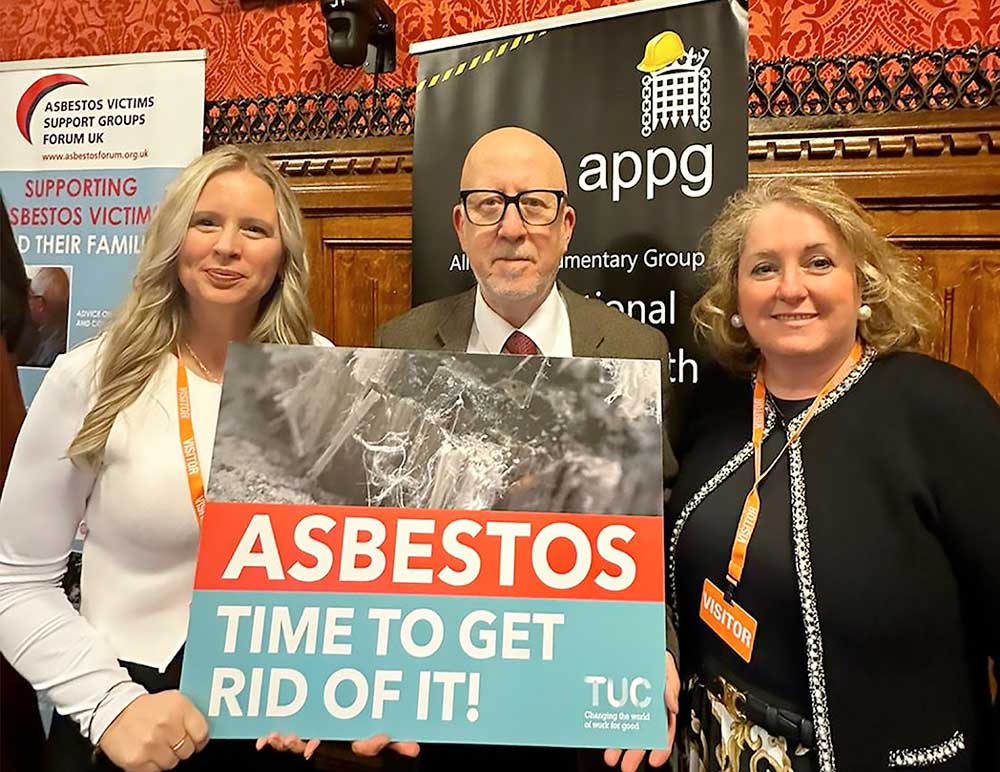
This year Global Asbestos Awareness Week will be held from April 1st to 7th. During this week organisations like ours aim to increase public understanding of the dangers of asbestos and promote preventative measures. We try to educate people about asbestos-related illnesses because although it’s not forefront in the public awareness, ASBESTOS HAS NOT GONE AWAY, despite being banned in many countries for decades.
- Asbestos is still present in 85% of schools, 90% of hospitals and many other public buildings.
- More people die from exposure to asbestos than die in road traffic accidents every year.
- Over 2,700 people a year are diagnosed with mesothelioma, a type of cancer that is entirely preventable.
Every day nurses, school children, teachers and public sector workers face possible exposure to asbestos. We need to raise awareness of this issue and campaign for the safe and urgent removal of this deadly substance.
Get in touch with us now, giving your name and address, so we can add your name to those supporting this campaign, and we will write to your MP on your behalf asking them to take action on this NOW.
Support us in our quest to save future generations from these terrible life-limiting and terminal conditions which are all 100% preventable.
Fundraising News
This quarter we want to acknowledge three small grants we have received with our thanks. Firstly £1000 WISHH grant funding to go towards the costs of our Bradford Social Group, and secondly contributions from the James Neill Trust Fund and the Sheffield Town Trust, to help cover the costs of the Sheffield Bereavement Group held in Burton Street. We are very grateful to all these organisations for your support with our groups.
We are also delighted to announce a three-year grant funding award from Three Guineas Trust totalling a whopping £125,000! This amount gives us so much stability and sustainability and the funds will be used to cover salary costs allowing the SARAG team to support hundreds more people affected by asbestos-related conditions. This funding means so much to us and those we support and “THANK YOU” just doesn’t cover how grateful we are!
We were also very pleased to receive £50,000 recently courtesy of the Postcode Lottery. A huge thank you to everyone who supports us — and to everyone taking part in the People’s Postcode Lottery.
This funding will help us keep providing vital support to individuals and families affected by asbestos-related diseases across Yorkshire and Humberside.
SARAG Social Groups
Our SARAG Social and Support Groups page can be found here
Our SARAG Bereavement Groups can be found here
Tuesday 28th April – International Workers Memorial Day 2026
Remember the dead fight for the living

Every year we join the unions who represent workers rights, to pay our respects for those who are no longer with us due to accident or illness caused by the workplace.
We will be at events across the region to support events as we have been over recent years.
Support the Yorkshire & Humberside Asbestos Support Group
Your Fundraising Can Make a Real Difference
At the Yorkshire & Humberside Asbestos Support Group, we stand alongside people affected by asbestos-related diseases, offering practical advice, emotional support, and help with accessing compensation and benefits.
Our services are free — but they are not cost-free.
We rely on the kindness, creativity, and community spirit of supporters like you to keep going. Every pound raised helps us continue supporting local families when they need us most.
Family & Friends Can Get Involved Too
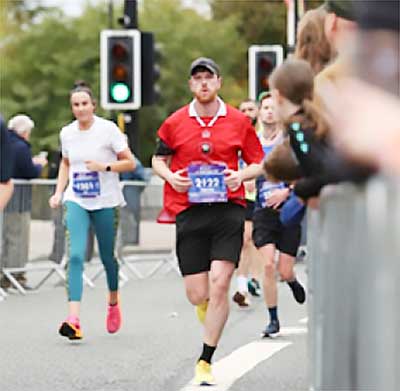
You don’t have to do this alone. Family members, friends, neighbours and colleagues are very welcome to organise or contribute to fundraising on your behalf.
Sometimes loved ones want to help but aren’t sure how — fundraising together can be a positive and meaningful way for them to show support.
If you, a family member, or a friend would like to talk through an idea, we would warmly welcome a chat.
Call us on 01709 360 672
Email enquiries@dreamy-cori.217-154-35-86.plesk.page
We’re happy to help you plan something
that feels manageable and right for you.
Finding Our Feet
The newsletter from the Bereavement & Family Support Service
By Deb Williams:
Yes! spring at last! March, April, May… the time of year when the sun noticeably rises earlier and goes down later. It starts to shine a bit brighter, and the earth warms up, waking from its sleepy slumber. There is nothing quite like it. The anticipation of warmer days, lighter nights, the budding of leaves on the trees, and bulbs breaking through the soil and showing themselves.
Spring is associated with new life, rebirth, anticipation of warm comforting days, and of hope. . This is not the case for everyone though. For those who are grieving or living with a life-limiting illness (whether that be us or a loved one) then spring can be a painful and bittersweet season.
How can we rebirth our new lives when hope, anticipation, and optimism have been replaced with dread and uncertainty? When everyone else is seemingly full of the ‘joys of spring’, planning and seeding new ideas and adventures, we feel the ‘spring’ in our step has gone; we feel out of kilter with the natural flow of life and the season, and we stand still, and we feel numb. The natural world itself is full of new life, new beginnings, second chances, and hope. . Things that we do not feel. Everyone else, seemingly, is getting on with their usual life, when the ‘usual’ and familiar has disappeared from ours.
Grief, whether that be from a death or a living loss, is a natural and normal human experience. Feeling grief is an acknowledgement of what we have lost, and unlike nature’s seasons it is not linear or predictable. It does not follow an order. It is a very personal experience and can feel like it is never ending.
Spring feels contrary to the realities of grief, but trust that your Spring will come. Seeds of a different life are planted within us without our knowing, and in your own time and in your own way, you will start noticing and recognising your own strengths, your courage, and your resilience, just like the new green shoots of spring that have managed to survive the winter, and break through the frost to show themselves to the warming sun. The bulbs in our gardens, the leaves on the trees, and the seedlings in our trays can give us all a sense of awe and wonder.
When your Spring comes, lean into it and sense the warmth of the sunshine from the inside out.
‘Nature can help us feel connected to something much larger than ourselves. This sense of connection can be comforting during times of grief, reminding us that we are part of a vast, interconnected web of life, and we are not alone. Nature helps to provide us with a model for grieving, for resilience and for hope. There is a season for everything, and nature shows us that.’
Here’s a little nature exercise for you to try:
Fifty Shades of Green (A sit spot invitation)
A ‘sit spot’ is a place in nature where you can comfortably sit and just ‘be’, soaking up the world around you.
A sit spot is a simple but potent Forest Bathing practice that encourages you to become more mindful; to connect with nature, to cultivate a deeper understanding of yourself and others; and most importantly to reconnect and build your relationship with nature.
Improving connection with nature has been shown to lower levels of anxiety, depression and stress; increase attention span and cognitive function and lead to improvements in psychological and social well-being.
An ideal length of time to spend in this practice is 20 to 30 minutes, but you may find that starting slow, maybe 5 to 10 minutes and then building up to 20 to 30 minutes works best for you.
So, once you have found your sit spot and sat for a few minutes orientating yourself, I invite you to soften your gaze and scan the landscape, from left to right and back again, noticing what colours catch your ‘eye’.
Now spend 5 – 10 minutes exploring the landscape around you to see how many different colours you can see. Pick a colour (maybe green) and gently explore visually whilst sat, how many different shades of that colour you can observe.
Creative Corner
No One Warns You
About Year Five
No one tells you that year five can break you in ways the first year didn’t.
The first year is a blur – you’re in survival mode, just trying to breathe through
the shock.
But year five… you know.
You’ve lived long enough without them to realize this is it.
They’re not coming back.
And somehow that truth cuts even deeper now.
By year five, people stop asking how you’re doing.
The world assumes you’re “better.”
But they don’t see how the ache has settled in, quieter but sharper – like a wound that never really healed right.
It’s in the little things now. A song. A scent.
Their name written somewhere unexpected.
It still knocks the air out of you, just like it did in the beginning – maybe worse, because now you understand the full weight of forever.
Walk a mile with me, a widow’s journey.
Author unknown. Poem submitted by Mandy K, who is a bereaved services user.
Well-being, breathing exercises.
Each quarter, I will aim to bring you an exercise that could help with how grief/bereavement might be negatively affecting your breathing, and thus your overall well-being.
Being bereaved and experiencing grief is a very stressful time. Being stressed can affect our breathing. Our everyday breathing patterns are often overlooked in the management of stress, anxiety, and panic. However, the way we breathe every day, influences how we feel and how much stress we experience. It also dictates how we breathe and how our bodies respond during high-stress situations. This breath-mind connection is not new-age ‘woo woo’..’ It has long been accepted by the scientific community that how we breathe affects which branch of the Autonomic Nervous System (ANS) – the ‘fight or flight’ sympathetic branch responsible for the stress response, or the parasympathetic ‘rest and digest’ responsible for relaxation, is activated. Our breath is a fundamental ‘state changer’ and by manipulating our breath and changing how we breathe, we can alter how we feel on both a physiological basis and a psychological basis.
Where possible, breathe only through the nose. Good functional, everyday breathing incorporates breathing through the nose during rest, activity, and sleep. Breathing through the nose takes practise and consistency. This will initially take conscious practice. Nasal breathing triggers the relaxation response and helps to prevent over-breathing which is a major fueller of anxiety and panic. Nasal breathing during wakefulness slows and draws the air into the lower parts of the lungs. This may help to maintain the strength and function of the breathing muscles and reduce the feeling of breathlessness.
When we are feeling stressed:
• Breathing becomes faster • Sighing becomes more frequent • More air is breathed with each breath • Breathing tends to be primarily limited to the upper chest • We tend to breathe through the mouth • There is a sensation of air hunger or suffocation.
When we are feeling relaxed:
• Slow breathing • More regular breathing (less frequent sighing and yawning) • Lighter breathing • Breathing low into the diaphragm • Breathing in and out through the nose • Effortless breathing with no feeling or sensation of air hunger.
An exercise to Help Stop a Panic/anxiety Attack, a coughing spree or to reset your nervous system.
When breathing becomes faster, harder, and from the upper chest, it can feed into feelings of panic and suffocation. To alleviate this, it is important to breathe slowly through the nose and deeply into the diaphragm. The following exercise can be helpful during a panic or hyperventilation attack as a rescue exercise, and the sooner you can spot the symptoms of panic and utilize this exercise, the better. It can also be practised for 3 to 4 minutes throughout the day to help reset the nervous system or at any time that you notice your breathing being a little faster and harder than usual. It will bring a calmness and regularity to your breathing.
Breathing Recovery, Sitting Directions:
- Sit up straight and take a normal breath in and out through your nose.
- Pinch your nose with your fingers after the breath out to hold your breath for up to five seconds. Count: 5, 4, 3, 2, 1. (no longer than 5 seconds).
- Let go of your nose and breathe in and then breathe normally through your nose for 10 seconds.
- Repeat the sequence for five minutes, five times daily, to improve the overall function of breathing or use immediately as an exercise to stop a panic/anxiety or coughing attack.
*(Adapted from the Buteyko Clinic International client hand out for RACING MIND, HIGH STRESS, ANXIETY, PANIC DISORDER AND TRAUMA)
Meals For One
Cauliflower & broccoli cheese

Preparation time – Less than 30 mins
Cook – less than 10 mins.
Serves 1
This is such a comforting classic – and the combination of cauliflower and broccoli makes sure this dish stands up in its own as a main course and not just as a side.
Ingredients
- ½ cauliflower head, smallest tender leaves reserved
- ½ broccoli head
- 10g butter
- 10g plain flour
- 1 tsp Dijon mustard
- 125ml/4fl oz full-fat milk
- 40g/1½oz cheddar, grated
- salt and ground black pepper
Method
1. Break the cauliflower and broccoli into florets and slice the stalks. Bring a saucepan of water to the boil, season heavily with salt and boil the vegetables for 2 minutes until just tender. Drain and set aside.
2. In a small saucepan, melt the butter and then add the plain flour. Stir well to combine and cook for 1 minute until it begins to bubble. Add the mustard, then slowly drizzle in the milk, whisking well between each addition. Boil for 1 minute after all the milk has been added, until the sauce has thickened. It should be just thicker than double cream – if it seems too thick, add 2–3 tablespoons water. Turn off the heat, add 30g/1oz cheese and stir. Season with salt and pepper.
3. Preheat the grill to its highest setting. Transfer the broccoli and cauliflower florets and stalks to a small ovenproof dish. Nestle in the small cauliflower leaves. Pour the sauce over the vegetables and sprinkle over the remaining cheese. Grill for 2 minutes until golden and bubbling. If you don’t have a grill, simply pour the cheese sauce over the vegetables, sprinkle with cheese and enjoy.
Recipe tips
If you want to batch cook this, you can make a full-size cauliflower cheese and freeze it into four portions.
Dates For Your Diary
See below for our face to face bereavement groups dates and for our peer support zoom meetings, just contact Deb for joining details.
*NEW*
The Pause -A Space to just ‘be’ – An online gathering. Every Monday morning at 10am, via Zoom. A place to gather in community, where we can have space to relax, re-set and just ‘be’ , using gentle breathing and relaxation techniques.
Please email deb@dreamy-cori.217-154-35-86.plesk.page for further details and the link.
*Also, we have a private Facebook page should you wish to join us. You can find us at
https://www.facebook.com/groups/saragbereavementsupport.
I hope you have enjoyed our submission in SARAG’s newsletter. Please feel free to contact me directly either by emailing me at deb@dreamy-cori.217-154-35-86.plesk.page, or contacting by phone or text messaging on 077141724126 should you wish to contribute anything to the next newsletter in 2026. It might be that you would like to write your own poem, share a story or have some ideas that you think will help our Bereavement & Family Support Service, or could enhance our content in the newsletter.
Take care during these winter months. You know where I am. Warmest of wishes, deb.
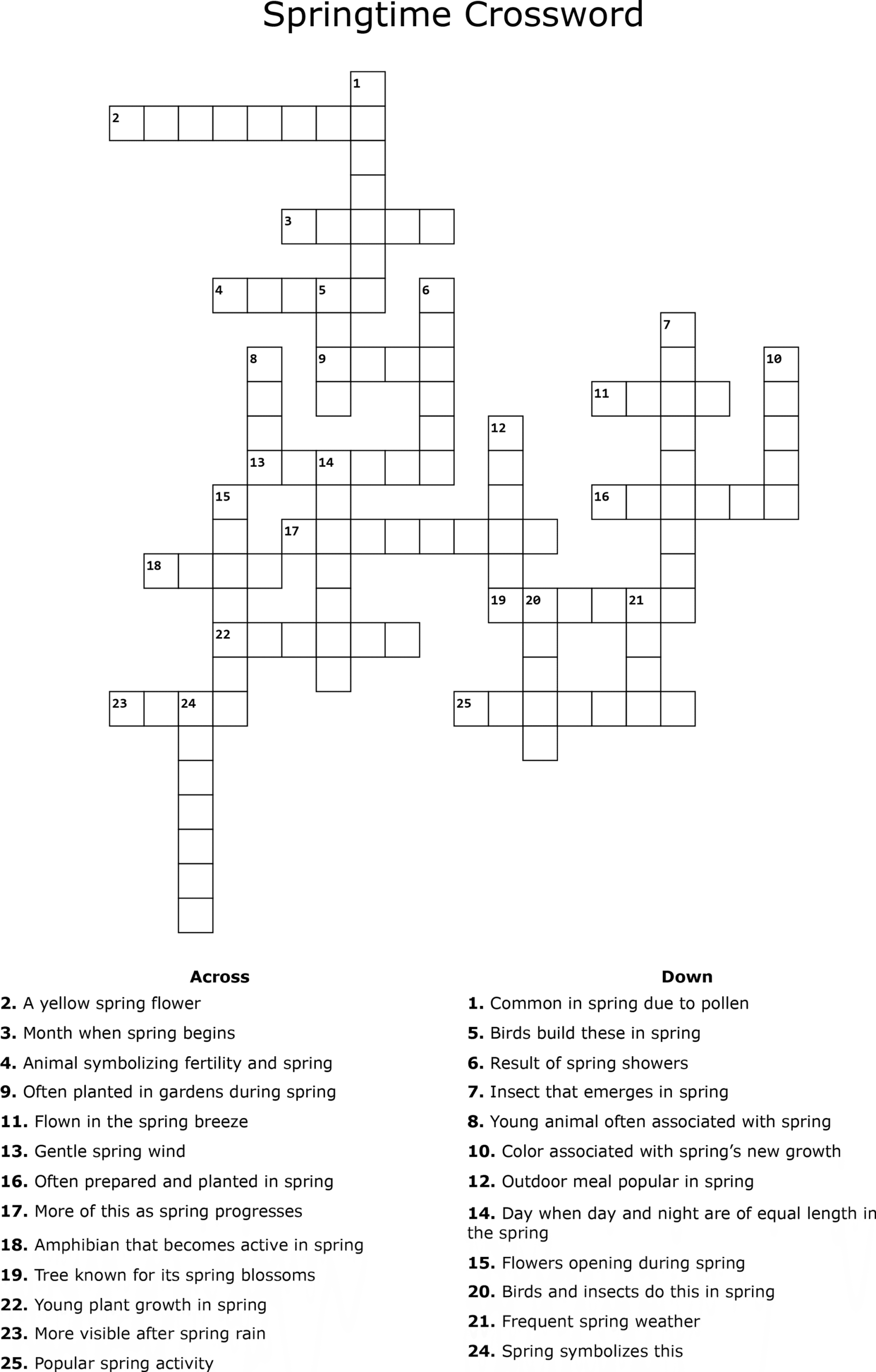
Springtime Crossword